

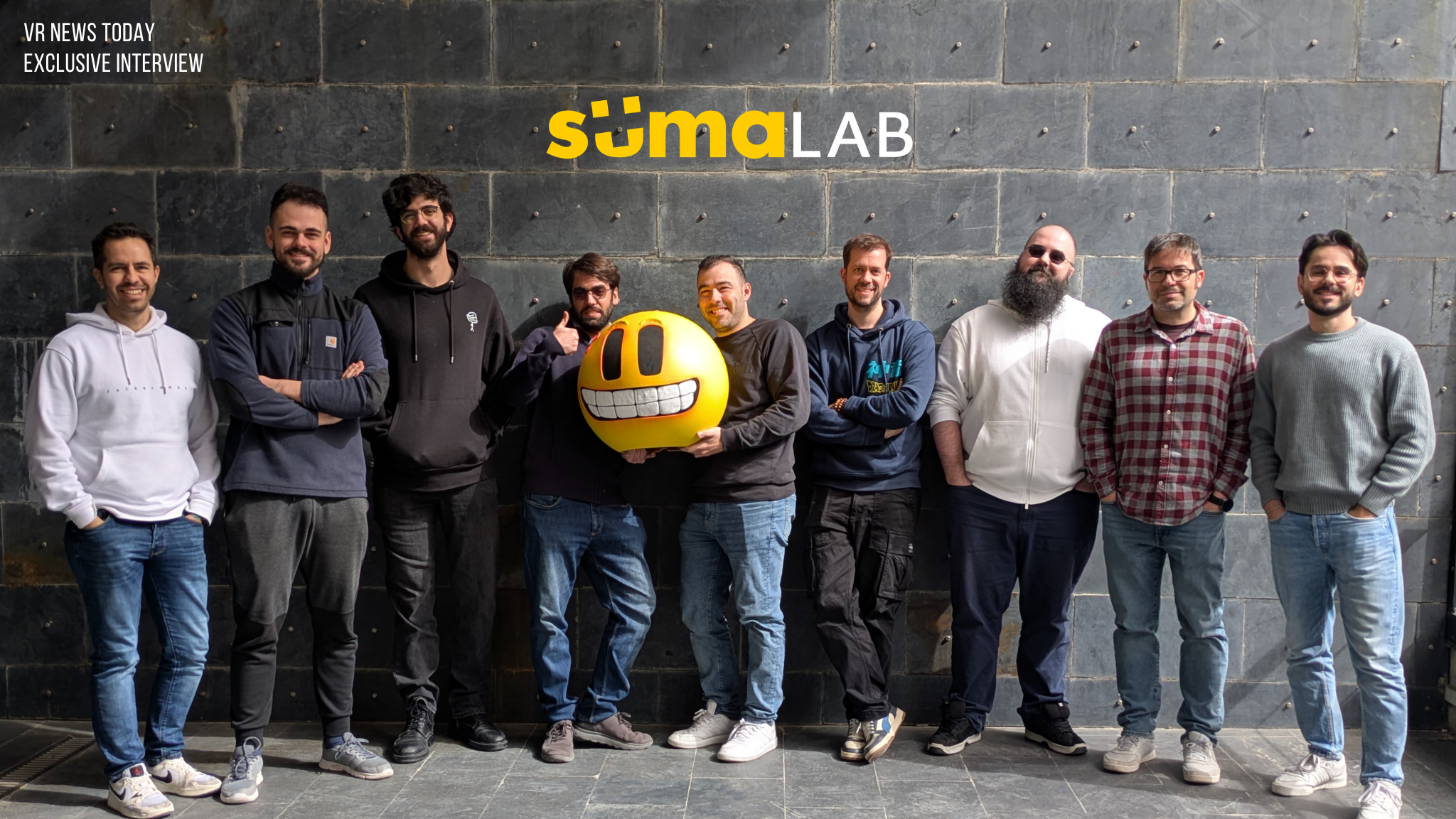
近年來,VR 遊戲不斷挑戰玩家對「移動」的想像,但高速移動與舒適度始終是一項難題。《Vertigo Rush》選擇了一條不同的道路,不是讓玩家駕駛載具,而是直接利用雙手攀爬、跳躍、衝刺,以身體動作完成一場真正屬於 VR 的跑酷競速體驗。
由西班牙獨立工作室 Sumalab 開發的《Vertigo Rush》,希望透過自然的手部移動方式,降低 VR 暈眩,同時保留高速競速帶來的刺激感。從最初的概念到如今的多人競技玩法,團隊始終圍繞著一個核心理念:「讓 VR 的移動真正發揮這個媒介的優勢。」
在本次專訪之前,VR NEWS TODAY 已完成《Vertigo Rush》的完整遊戲評測,並深入體驗遊戲的跑酷、多人競速與手部移動系統。本次專訪,我們邀請到 Sumalab Studio,分享《Vertigo Rush》的誕生過程、手部跑酷系統的設計理念、如何在速度與舒適性之間取得平衡,以及團隊對未來 VR 跑酷與運動類遊戲發展的看法。
本文為 VR NEWS TODAY 與 Sumalab 的完整專訪原文,中文圖卡版本請見文末。

Q1. Could you introduce Sumalab and your role within the studio? What inspired your team to create Vertigo Rush?
Sumalab is a small independent studio based in Spain. We originally came from software development, but over time we managed to turn game development into our way of life. We’ve been creating VR and arcade-style games for several years, with a strong focus on clear mechanics, physical gameplay, and games that are immediately fun to play.
I’m Diego Martín, Creative Director at Sumalab. My role usually sits somewhere between game design, creative direction, production, and a bit of everything else that happens in a small indie studio. We are a compact team, so everyone is very hands-on.
Q2. Every game begins with an idea. What was the original vision behind Vertigo Rush, and how did it evolve into the fast-paced VR parkour racing experience players see today?
Motion sickness has always been a key concern for us in VR, so we wanted movement to feel as natural as possible and reduce that disconnect between the virtual body and the real one. Since VR players hold controllers in their hands, not on their feet, hand-based movement felt like a natural evolution for the medium. From there, we wanted to create something competitive, physical, and fun to play with friends, and that gradually became Vertigo Rush: a racing game built specifically around VR locomotion.

Q3. Movement is the heart of Vertigo Rush. Why did your team decide to build the entire game around physical movement and parkour, rather than traditional racing mechanics?
Because in VR, movement can be much more than just steering a vehicle. We wanted players to feel physically involved in the race: climbing, jumping, pushing forward, using momentum, and reading the track with their whole body. Traditional racing mechanics can work in VR, but we felt that hand-based parkour made better use of the medium and created a more direct connection between the player, the track, and the speed of the race.
Q4. Fast locomotion can be difficult to design in VR. How did you balance speed, comfort, and player control while keeping every movement exciting and intuitive?
It was mostly a process of trial and error: testing, adjusting, and testing again until the movement felt fast and exciting, but still easy to understand. In VR, learning a new locomotion system can almost feel like learning to walk again, so we wanted to reduce friction as much as possible and make the controls feel natural after just a few minutes.

Q5. What were the biggest challenges in making parkour feel fair, skill-based, and enjoyable for players of different experience levels?
The biggest challenge was making the movement easy to understand, but hard to master. We wanted new players to enjoy the race quickly, while experienced players could still improve through better timing, cleaner routes, shortcuts, and momentum control. The tracks are designed so you can finish and have fun from the beginning, but there is always room to become faster.
Q6. Could you tell us more about Heaven, and how the story complements the game’s competitive gameplay?
Heaven is a floating city divided by status, where racing is not just entertainment, but a way to challenge the system. The story follows two siblings trying to rise through that world, and the races become part of their journey. We wanted the single-player mode to give more context and emotional weight to the competition, without losing the arcade energy of the game.
延伸觀看|Vertigo Rush 片段
下方影片呈現《Vertigo Rush》的移動方式,對應本次訪談中所提及的設計理念。
Q7. Since opening the beta, what has been the most valuable feedback you’ve received from players?
The most valuable feedback has probably been the positive energy from players. After our previous launch (HeadHunters), where we had to spend a lot of time explaining design decisions and encouraging people to give the game a chance, seeing players react so positively to Vertigo Rush has been a huge morale boost for the team. It has given us a lot of confidence, but also a lot of motivation to keep polishing the game as much as possible so players can really enjoy it.
Q8. After launch, what are your long-term plans for Vertigo Rush?
Our first goal is to keep improving the game with player feedback. We plan to add more content over time. If the game connects well with players, we would also love to expand the number of circuits, introduce a deeper progression system, and add more online customization options.
延伸觀看|Vertigo Rush Trailer
下方影片呈現《Vertigo Rush》的移動方式,對應本次訪談中所提及的設計理念。
Q9. As VR hardware continues to evolve, how do you see movement-based games shaping the future of immersive gaming? What possibilities are you most excited to explore?
I think the future of VR should have room for everything. The exciting part is not finding one single correct formula, but exploring many different paths and discovering mechanics that could only exist in this medium. Movement-based games are one of those paths, and we’re excited by the possibility of finding new twists, new sensations, and ideas that make players think: “I’ve never experienced anything like this before.”
Q10. Lastly, is there a message you would like to share with our readers and the global VR community who are looking forward to playing Vertigo Rush?
Above all, we hope players have fun. At the studio, we have some very real but healthy rivalries when we play Vertigo Rush, and every test session usually ends with a lot of laughs and the occasional friendly insult. For us, that is the most important thing in a game: beyond the technology, the features, or the ambition, it has to be fun to play.
Vertigo Rush on Meta Horizon and Steam(PCVR)
Meta Horizon:https://www.meta.com/experiences/vertigo-rush/8731055120282939/
Steam (PCVR):https://store.steampowered.com/app/1483380/Vertigo_Rush
對 Sumalab 而言,《Vertigo Rush》不只是另一款 VR 競速遊戲,而是一次對 VR 移動方式的重新探索。
從手部跑酷、降低暈眩,到兼顧新手與高手的操作深度,團隊希望打造的是一套只有 VR 才能實現的遊戲體驗,而不是將傳統遊戲玩法搬進虛擬世界。
展望未來,Sumalab 也表示,除了持續根據玩家回饋更新內容之外,他們希望加入更多賽道、更完整的成長系統,以及更豐富的線上自訂功能,讓《Vertigo Rush》持續成長。
最後,Diego Martín 分享了一句簡單卻最能代表團隊理念的話:
「無論技術、功能或野心有多大,一款遊戲最重要的事情,就是它必須好玩。」
或許正是這份「Fun First」的精神,讓《Vertigo Rush》從一開始便以玩家體驗為核心,也讓人更加期待正式版本帶來的更多可能。
《Vertigo Rush》完整評測
想了解《Vertigo Rush》實際遊玩體驗嗎?
VR NEWS TODAY 已完成完整遊戲評測,深入分析遊戲的移動系統、多人模式、跑酷節奏,以及實際遊玩感受。
👉 閱讀完整 Review


